The Emperor as Christ: Redating the Rise of Christianity
When the corrected timeline is applied, the conclusion is as clear as it is radical. The foundational story of Christianity was not an event from 1st-century Judea. It appears to be the story of a powerful 11th-century Roman Emperor in Constantinople whose life, divine titles, and succession by a man named Peter were used as the direct template to write the Gospel narrative. This story was then projected backward in time by a millennium, creating the ancient history we know today. The real rise of Christianity was not a slow-burning religious movement, but a dramatic political event centered on an emperor who was worshipped as a resurrected god.
CLASSICS
11/28/2025
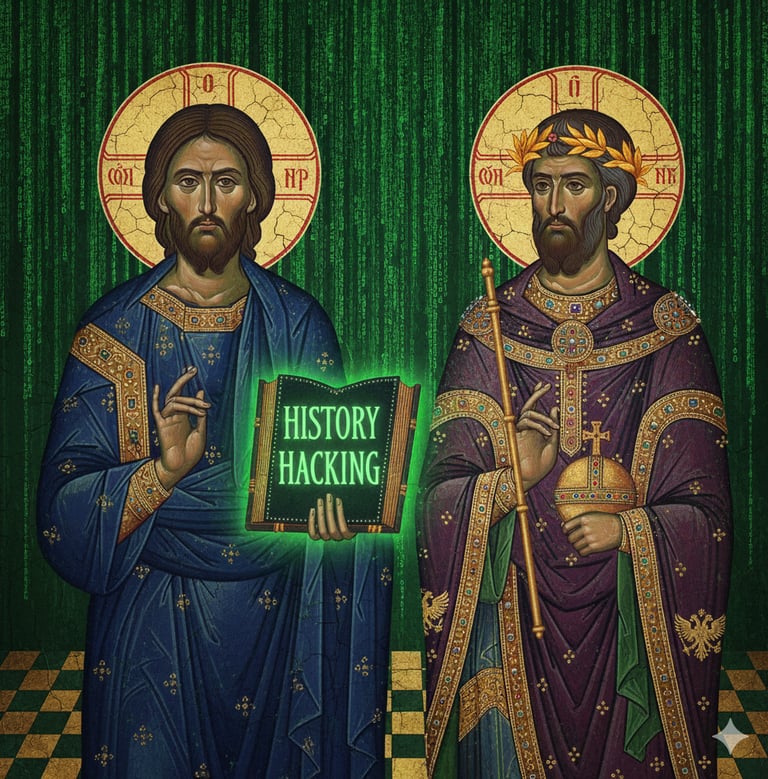
The conventional story of Christianity is one of a humble faith that grew over centuries to conquer the Roman Empire from within. It’s a narrative of apostles, martyrs, and councils that supposedly took place in the first few centuries AD. But what if this timeline is off by a thousand years? What if the real, foundational story of Christianity’s rise took place not in 1st-century Judea, but on the emperor's throne in 11th-century Constantinople?
By correcting the astronomical data used to date ancient history, a new, radically different chronology emerges. This revised timeline suggests that the central figure of the Christian story was not a provincial preacher, but a powerful Roman Emperor whose life, titles, and succession became the template for the New Testament itself.
The 521-Year Glitch in the Timeline
As discussed in previous articles, historical dating often relies on ancient eclipse records. However, these dates are calculated using a speculative parameter (Delta T) that, when corrected, shifts the entire timeline.
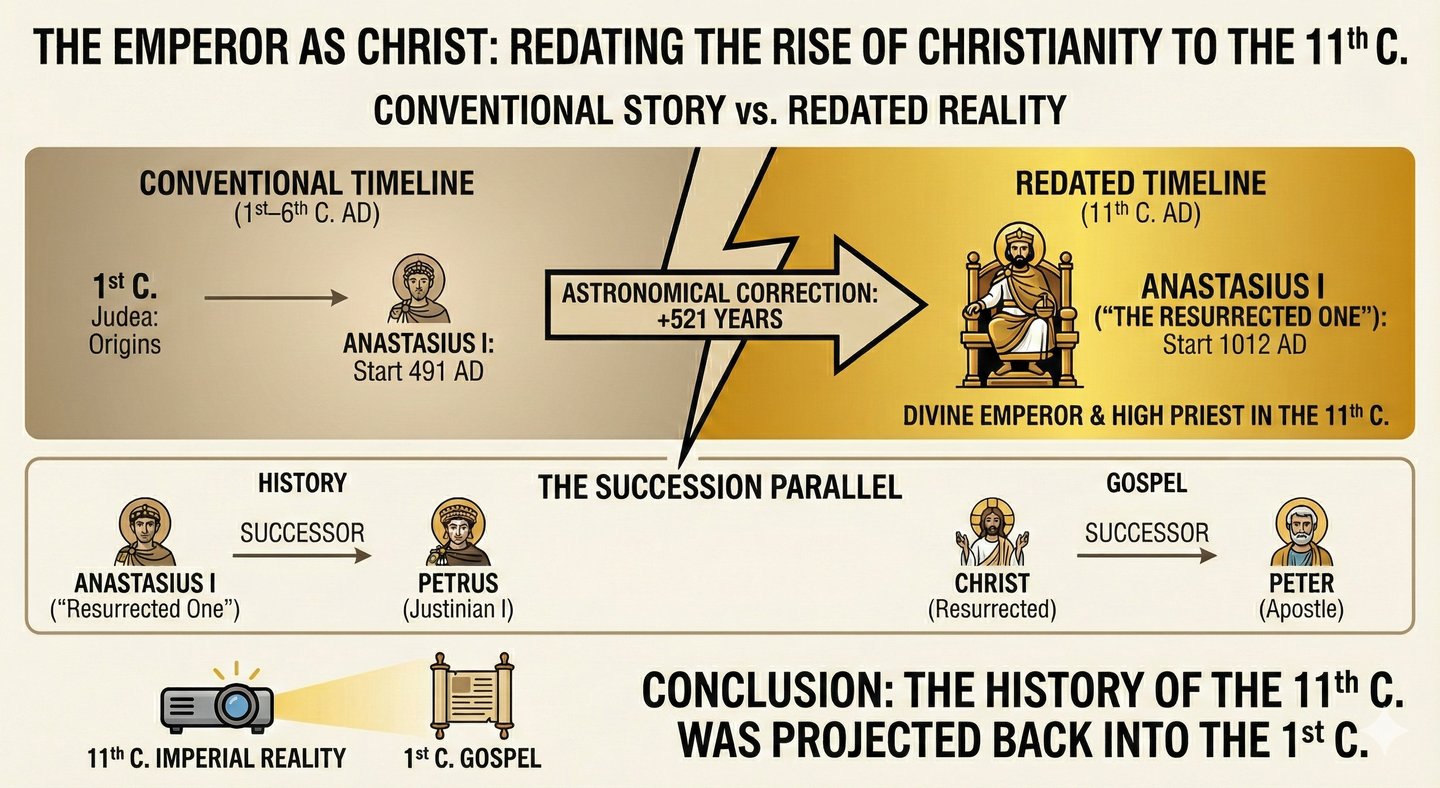
A consistent pattern emerges from this re-dating: eclipse reports and historical events from the 5th and 6th centuries AD are systematically shifted forward by 521 years.
This has a monumental consequence for one emperor in particular: the reign of Emperor Anastasius I.
Official Start Date: 491 AD
Corrected Start Date: 1012 AD (491+521=1012)
This crucial shift moves Anastasius I out of the "Dark Ages" and places him directly at the beginning of the High Middle Ages, the very period when the power of the Church began to solidify across Europe.
An Emperor Named "The Resurrected One"
The identity of this re-dated emperor is the key to the entire puzzle. The name "Anastasios" is the Greek word for "The Resurrected One," a title that is a direct synonym for Jesus Christ.
The parallels are stunning:
His name literally means Resurrection.
Contemporary chroniclers described his reign as a "true resurrection" of the Roman Empire after a period of decline.
He was the very last Roman emperor to be honored with the title "Divus" (the Divine), an official honor signifying a mortal's ascension to the level of the gods.
He was also the last emperor to hold the title of "Pontifex" (High Priest or "bridge-builder"), a title that would later become exclusive to the Roman Pope.
In this single figure, we have a ruler whose name means Resurrection, who was officially called Divine, and who held the highest priestly title of the empire. He was, in effect, a Christ-figure and Pope combined, ruling from the emperor's throne.
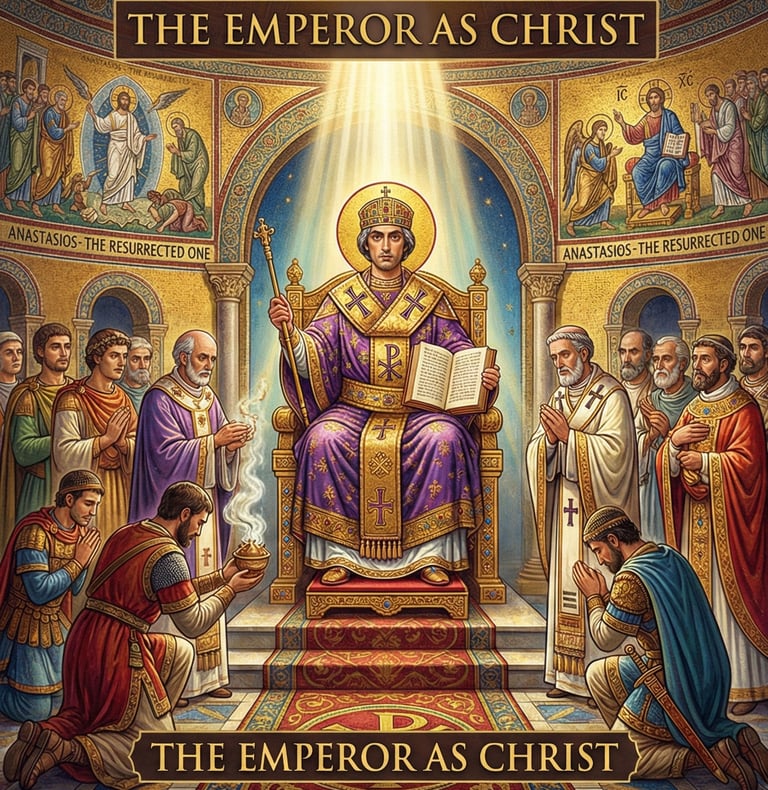
And His Successor Was Peter…
The final piece of evidence is the most compelling, creating a direct and undeniable parallel with the New Testament narrative. After the death of Anastasius I, "The Resurrected One," who became his successor?
History records that the next emperor's birth name was Petrus—the Latin form of Peter.
This Emperor Peter took the throne name Justinian I, but the underlying fact is shocking: the historical record, when re-dated, shows a ruler named Peter taking power immediately after the emperor known as "The Resurrected One."
This mirrors the Gospel story perfectly, where the resurrected Christ chooses Peter as his successor and the "rock" upon which he will build his church. The re-dated history of the Roman Empire reveals the same sequence of events: the reign of "The Resurrected One" followed by the rule of "Peter."
Conclusion: The 11th Century Gospel
When the corrected timeline is applied, the conclusion is as clear as it is radical. The foundational story of Christianity was not an event from 1st-century Judea. It appears to be the story of a powerful 11th-century Roman Emperor in Constantinople whose life, divine titles, and succession by a man named Peter were used as the direct template to write the Gospel narrative. This story was then projected backward in time by a millennium, creating the ancient history we know today.
The real rise of Christianity was not a slow-burning religious movement, but a dramatic political event centered on an emperor who was worshipped as a resurrected god.